1. The Questions Itself reveals A Change in the Way We Look at the concept of coverage
Over the past several decades the discussion of reaching remote or disadvantaged regions by air has been described as a choice between ground infrastructure and satellites. The rise of feasible high-altitude platforms has provided an alternative that doesn't fit neatly into either category this is what can make the difference interesting. HAPS don't aim to replace satellites in all ways. They're competing for use circumstances where operating at 20 kilometers instead of 500 or 35,000 kilometres produces meaningfully better outcomes. Understanding where that advantage is genuine and what it doesn't can be a whole process.
2. Lasting latency is where HAPS succeeds In a Straight Line
Signal travel time is governed by distance, and distance is a factor that stratospheric platforms hold the advantage of having a clear structural advantage over every orbital system. Geostationary satellites sit approximately 35,786 kilometers above the equator, resulting in time-to-travel latency around 600 milliseconds. That's enough for voice calls albeit with noticeable delay, however it is not ideal for real-time applications. Low Earth orbit constellations have made this much better operating at 550 to 1,200 kilometres, with latency ranging from the 20-40 millisecond range. A HAPS vehicle operating at 20 km has latency values similar to terrestrial networks. If you are in a situation where responsiveness is essential such as industrial control systems, emergency communications, financial transactions, direct-to-cell connectivity -- that difference is not marginal.
3. Satellites Gain Global Coverage and That's All That Matters
The stratospheric platform that is currently being developed could provide coverage for the entire globe. The single HAPS vehicle covers a regional footprint -- large according to terrestrial standards, however finite. To provide global coverage, you'll need an entire network of platforms scattered across the globe, with each with its own set of operations along with energy systems and stationkeeping. Satellite constellations are particularly large LEO networks, have the ability to cover the Earth's surface with overlapping covers in ways the stratospheric system simply cannot replicate with existing vehicle numbers. For applications that require a truly universal reach such as maritime tracking, global messaging, and polar coverage, satellites are the only feasible option at the scale.
4. Resolution and Persistence Favor HPS for Earth Observation
When the mission involves monitoring the same area continuouslymonitoring methane emissions from an industrial corridor, or watching the development of a wildfire in real time as well as monitoring oil contamination being released from an offshore incident -- the persistent intimate nature of the stratospheric satellite produces quality of data that satellites struggle to attain. Satellites operating in low Earth orbit can pass by any point on the surface for minutes at time and has revisit intervals measured in either hours or days based on constellation size. A HAPS vehicle, which is positioned above the same area over weeks gives continuous observations using sensor proximity to provide greater spatial resolution. To be used for stratospheric earth observation this persistence is usually far more valuable than global reach.
5. Payload Flexibility Is a HAPS Advantage Satellites Can't effortlessly match
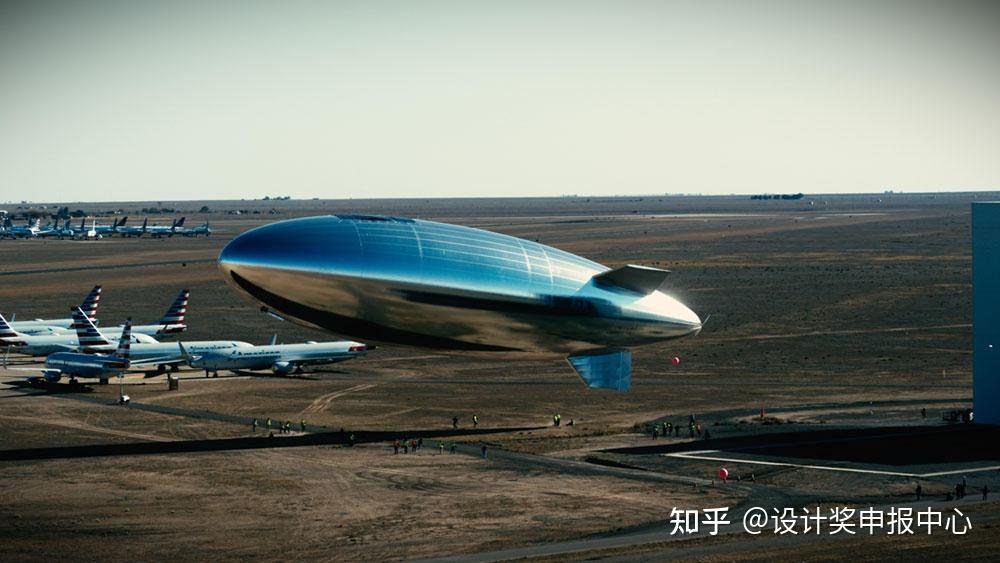
Once a satellite is launched, its payload is fixed. Modifying sensors, swapping communications hardware or adding new instruments requires launching completely new spacecraft. A stratospheric spacecraft returns to the ground after each mission meaning that its payload can be modified, reconfigured or completely changed as the requirements of missions change or more advanced technology becomes available. Sceye's airship designs are specifically suited to important payload capacity, making possible various combinations of telecommunications equipment, carbon dioxide sensors and system for disaster detection on the same aircraft This flexibility requires multiple satellites to replicate, each with its own launch cost and orbital slot.
6. The Cost Structure is fundamentally different
Launching a satellite requires cost of the rocket as well as ground segment development, insurance and the recognition that hardware failures in orbit are a permanent write-off. Stratospheric platforms are more akin to aircrafts, and can be recovered, examined in repair, redeployed, and returned. This doesn't automatically make them more expensive than satellites on cover-area-by-area basis. But it impacts the risk profile and the upgrade economics considerably. For those trying new services to enter new markets, the ability to retrieve and modify their platform rather than accepting orbital hardware as a sunk-cost represents a meaningful operational advantage, particularly in the early commercialization phases that the HAPS industry is facing.
7. HAPS may be able to act as 5G Backhaul, Where Satellites Are Not effectively
The telecommunications structure that is made possible by a high-altitude platform station operating as a HIBS that is in essence being a cell tower that is located in the sky -- is designed to work with existing mobile network standards in ways that satellite connectivity historically does not. Beamforming using a stratospheric communications antenna permits dynamic allocation of signals across a large area of coverage as well as 5G backhaul connectivity to earth infrastructure as well as direct to device connections simultaneously. Satellites are increasingly able to support this technology, but their physics of operating close to ground gives stratospheric technologies an advantage in terms of signal capacity, frequency reuse, and compatibility with spectrum allocations designed for terrestrial networks.
8. Operational Risk and Weather Differ In a significant way between the Two
Satellites, when they are in stable orbit, are largely indifferent to terrestrial weather. A HAPS vehicle operating in the stratosphere will face the more challenging operational environment such as stratospheric patterns of wind variations in temperature, the challenge of engineering to endure overnight at an altitude without losing station. The diurnal cycle or the monthly rhythm of solar power availability and nighttime power draw, is a design constraint that all HAPS powered by solar power must solve. Innovations in lithium sulfur battery energy density and solar cell efficiency are closing the gap, but it is an important operational factor that satellite operators simply don't have to confront in the same manner.
9. The Honest Answer Is That They have different missions.
Making HAPS and satellites appear as winning-all-the-time misunderstands how the non-terrestrial infrastructure will develop. The more accurate picture is a layered model in which satellites have global reach and applications in which universal coverage is more important than anything else and stratospheric platforms help with regional persistence missions -connectivity in highly challenging environments, continuous environmental monitoring in disaster recovery, and 5G expansion into areas where terrestrial rollout is not economically feasible. Sceye's location echoes precisely this idea: a system was designed to accomplish things in certain regions, in long-term timeframes, using the use of a sensor and communications system which satellites won't be able to replicate at that altitude and the distance.
10. The Competition Will Ultimately Sharpen Both Technologies
There is a reasonable argument that the growth of credible HAPS programmes has helped accelerate technology in satellites, and the reverse is also true. LEO network operators have improved the boundaries of coverage and latency, in ways that have raised the bar HAPS has to get clear to compete. HAPS developers have demonstrated consistent regional monitoring capabilities, which is prompting satellite operators think harder about return frequency and the sensor's resolution. For example, the Sceye and SoftBank partnership that targets Japan's nationwide HAPS network, including pre-commercial services set for 2026 is one of the clearest indications that the stratospheric platforms have moved from being a theoretical competition to an active partner in shaping how the non-terrestrial communication and monitoring market develops. Both technologies will be better in the face of pressure. Have a look at the top sceye for more recommendations including softbank pre-commercial haps services japan 2026, what haps, sceye haps airship status 2025 2026 softbank, Sceye endurance, Diurnal flight explained, sceye services, softbank sceye haps japan 2026, sceye aerospace, detecting climate disasters in real time, what are high-altitude platform stations and more.
Search For Wildfires And Other Disasters From The Stratosphere
1. The Detection Window Is the Most useful thing you can extend
Every significant disaster has a time that can be measured as minutes, often in hours -when early awareness would have changed the course of action. A wildfire discovered when it covers a quarter of hectare is the problem of containment. A similar fire is found in the case of fifty hectares is a major crisis. An industrial gas release that is found within the first twenty minutes is usually able to be stopped before it becomes an immediate public health emergency. The same release, which was discovered three hours later, through reports from ground or by a satellite that passes overhead during its scheduled visit, has already dispersed into a problem with no solution. The extension of the detection window is possibly the most valuable thing improved monitoring infrastructure can provide, and a continuous observations of the stratospheric sphere is among the few ways to alter the window effectively rather than minimally.
2. The Wildfires are getting harder and harder to Monitor Using Existing Infrastructure
The magnitude and frequency of wildfires during the past decade has outpaced the monitoring system designed to monitor the fires. In-ground detection networks watchtowers, sensor arrays, ranger patrols cover too little area too slowly to be able to identify fast-moving fires at their earliest stages. Aircraft response is efficient, but expensive, weather-dependent as well as reactive rather than anticipatory. Satellites cross any area according to a frequency measured in hours, which means that a blaze that ignites over, spreads, and then crowns during a pass does not trigger any warning whatsoever. The combination of more fires speedier spread, increased rates of spread triggered from drought-related conditions and complex terrain creates a gap that conventional methods can't close structurally.
3. Stratospheric Altitude Provides Persistent Wide-Area Visibility
A platform operating at 20 kilometres above the surface is able to maintain a continuous view across a footprint of ground that spans several hundred kilometres -- including areas prone to fire, coastlines forests, forest margins and urban interfaces without interruption. As opposed to aircrafts, it does not have to turn back for fuel. In contrast to satellites it doesn't disappear behind the horizon in the repetition cycle. For wildfire detection specifically, this wide-area, continuous view indicates that the system is monitoring when fire starts, watching when first spread occurs, and looking out for changes in fire behavior -- offering a continuously-changing stream of data instead of a number of isolated snapshots emergency managers must interpolate between.
4. thermal and Multispectral Sensors Are able To Detect Fires before smoke becomes visible.
The most useful technology for detection of wildfires does not wait for visible smoke. Thermal infrared sensors can detect heat variations that indicate ignition before the fire has created any visible signature at all It can identify hotspots among dry vegetation, glowing ground fires beneath the canopy of forest, and the initial appearance of heat signals in fires that are starting to develop. Multispectral imaging adds further capability by detecting changes to the vegetation condition -- moisture stress as well as browning, drying and drynesswhich can indicate an increase in risks of fire in specific regions prior to the occurrence of any ignition event. A stratospheric platform equipped with this sensor combination provides both the early warning sign of active ignition and a predictive insight into where the next fire will occur. This differs in the qualitative quality of alertness to the current situation that conventional monitoring.
5. Sceye's Multi Payload Approach Combines Detection with Communications
One of many practical ramifications of major catastrophes is that the infrastructure that people rely on for communication like mobile towers power lines, internet connectivity is typically one of the first things to be destroyed or flooded. The stratospheric platform, which includes the sensors to detect disasters and a telecommunications payloads tackle this issue from a single vehicle. Sceye's design approach to mission planning considers observation and connectivity as complimentary functions, not as competing types, which means that the same platform that is able to detect a burning wildfire could also provide emergency communications to rescuers at the ground who's terrestrial networks have gone dark. The satellite tower doesn't just see the disaster -- it also keeps people connected via it.
6. Deterrence Detection Expands Far Beyond Wildfires
Wildfires may be one of the most compelling use cases in the ongoing monitoring of stratospheric temperatures, this same platform's capabilities can be utilized in a larger range of scenarios for disaster. Floods can be tracked as they progress across regions of the coast and rivers. Earthquake-related aftermaths -- such as broken infrastructure, roads blocked, and displaced populations -benefit from rapid broad-area assessment that ground teams do not do quickly enough. Industrial accidents that release harmful gasses or oil pollution into coastal waters can produce a signature detectable by appropriate sensors from stratospheric altitude. Monitoring climate disasters in real time across these categories requires monitoring layer that is present monitoring the environment, constantly, and capable of distinguishing between the typical environmental variations as well as the signs of evolving emergencies.
7. Japan's disaster-related profile makes the Sceye Partnership Especially Relevant
Japan experiences a disproportionate share of the world's important seismic natural disasters. It also experiences regular storm seasons that affect coastal regions, and also has several industrial incidents requiring rapid environmental monitoring response. The HAPS partnership of Sceye and SoftBank focused on Japan's nationwide infrastructure and pre-commercial services by 2026 sits at the intersection of stratospheric connectivity and disaster monitoring capabilities. A nation that has Japan's level of disaster risk and technological proficiency is arguably the best early adopter of stratospheric infrastructure that blends coverage resilience and real-time observation as well as the essential communications platform that emergency response relies upon and the monitoring layer which early warning systems require.
8. Natural Resource Management Benefits From the Same Monitoring Architecture
The capabilities of sensors and persistence which make stratospheric platforms effective for detecting wildfires and other disasters can be applied directly to natural resource management. They work at longer intervals, but require similar monitoring frequency. Monitoring forest health -- which tracks the spread of diseases such as illegal logging or change -- gains from monitoring that is continuous and able to detect slow-developing risks before they become severe. Monitoring of water resources across large catchment areas, coastal erosion tracking, as well as the monitoring of protected areas from incursions all feature applications where an observation platform at the stratospheric level continuously can provide actionable data that flight passes by satellite or costly air surveys are not able to replace cost-effectively.
9. The founder's mission defines why The Detection of Disasters Is Key
Understanding why Sceye places such emphasis on environmental monitoring and detection of natural disasters as opposed to treating connectivity as the primary mission and monitoring as a second-rate benefitis a matter of understanding the original approach that Mikkel Vestergaard provided to the company. A background in applying sophisticated technology to large-scale humanitarian challenges produces a different set of the priorities for design than a focused on commercial telecommunications. The ability to detect disasters can't be installed on a connectivity device as a value-added function. It's an expression of the belief that stratospheric structures should be effectively utilized for various types of issues -- climate disasters, environmental catastrophes, humanitarian emergencies where earlier and better information genuinely impacts the outcome for the affected population.
10. Persistent monitoring alters the relationship between Decisions and Data
The deeper shift that catastrophe detection at the stratospheric level enables isn't just a faster response to specific events It's a shift in how decision-makers relate to environmental risks across time. If monitoring is intermittent, it is possible that decisions on resource deployment, emergency preparations, or infrastructure investment must be made under the hazard of uncertainty over existing conditions. If monitoring is constant the uncertainty is reduced dramatically. Emergency managers using an in-real-time data feed from a constant stratospheric monitoring platform above their responsibilities are making decisions from entirely different viewpoint than those who are relying on scheduled satellite passes or ground reports. This shift from snapshots that are periodic to continuous conditional awareness is the thing that makes stratospheric Earth observation from platforms like those being developed by Sceye in a way that is transformative, not just incrementally useful. See the most popular Cell tower in the sky for site recommendations including Diurnal flight explained, Diurnal flight explained, telecom antena, stratospheric internet rollout begins offering coverage to remote regions, what are high-altitude platform stations haps definition, softbank haps pre-commercial services japan 2026, sceye haps payload capacity, sceye softbank partnership, japan nation-wide network of softbank corp, aerospace companies in new mexico and more.
